
Wasps love UK lofts: they offer a warm, dry space that is rarely disturbed, ideal for the building of papery nests that can grow during the summer months. Inside this confined space, a disturbed colony can become highly defensive, posing a risk to anyone accessing the loft for reasons of storage, checks, or maintenance. If you suspect wasp activity in your attic, rest assured that Eradikil Pest Control is here to offer fast, professional, and safe removal of wasp nests – and this guide offers assistance on spotting nests as well as what to do when you find one.
How to spot a wasp nest in your loft or attic
Detecting a wasp nest in your home requires your close attention; the presence of a nest in your attic will usually come to your attention by the following signs:
- Regular wasp traffic around soffits, rooflines, vents, and eaves. It’s useful if you can track flight paths of any wasps particularly at dawn or in late afternoon when activity is at its highest.
- Buzzing or rustling noises behind plasterboard, above the ceiling, or within the loft insulation.
- Papery structures which attach to rafters, joists, or the gable wall. These will usually be greyish in colour and have a swirled pattern not unlike wood grain.
- Frass – a scattered debris of wood pulp or chewed material left by wasps building a nest.
- Higher activity in warm weather: Between July and September, nests will reach maturity, containing hundreds of wasps and increasing ingress into human living areas.
On inspecting the loft area after seeing signs of activity, you may see the nest or see more of the above evidence. If you can’t find the nest, do not dig deeper for it. This could disturb a colony and provoke the wasps; instead, keep the loft closed and call Eradikil for further advice.
Wasp nest in attic – should I leave it alone?
This is a question with a more nuanced answer than some may realise. Sometimes, the best bet will be to leave the nest until it is convenient to remove, but timing is everything. Bear the following in mind:
- If discovered in late winter, nests are likely to be inactive and will not be reused – you can leave them until it is convenient to remove, as workers die off in the autumn months and queens stay elsewhere in winter.
- In spring, small founding nests can become a bigger problem if disturbed. Early intervention stops this from happening.
- In summer or early autumn, wasps’ nests must not be left. At their peak, they may be home to thousands of wasps and if disturbed will trigger a defensive response. Wasp nest removal is essential at this stage.
Bear in mind that the loft may need to be accessed not only by yourself but by contractors assessing repairs; accessing areas such as water tanks or wiring close to an active nest is a genuine health risk. If wasps are entering the home, or if you have children, pets, or allergy sufferers, immediate action is essential. Professional treatment is needed to eliminate the colony in a risk-free way. If you’re still unsure, requesting a same-day callout will allow you to assess whether it’s safe to wait, or essential to act immediately.
Risks of having a wasp nest in your attic
Some of the risks of living near a wasp nest will be more obvious than others, but let’s look at the possible threats that make it so important to deal promptly with them.
- Stings and allergy: If a colony is agitated, multiple stings are a possibility. Anyone with a tendency towards allergic reactions (anaphylaxis) is at heightened risk – and you may not know about these allergies until someone is stung.
- Ingress to living spaces: Wasps can enter the living areas of a home through light fittings, extractor vents, and other gaps, and may venture out to look for food or nesting material.
- Swatting a wasp: The natural reaction to seeing a wasp may be to swat it and remove it from the area, but exercise caution: killing or injuring a wasp causes it to release alarm pheromones which attract nearby wasps and increase aggressive behaviour.
Professional Wasp Nest Removal vs DIY
Instinctively, many of us may feel that the simplest way to deal with a wasp infestation is to do it yourself – and for small, accessible nests, a DIY spray or other compound might work. But even these carry some risks in a loft: with the visibility poor and space limited, it’s not always easy to apply the product correctly nor to escape from the loft. Getting it wrong can mean that at best the wasps move deeper into the structure and at worst swarm defensively. Knowing and having access to the right equipment is another hurdle DIY struggles to clear.
Professionals, for their part, have done this work many times over. They know what they are dealing with and how to deal with it; how to protect themselves and you; and most importantly they know what will work in eliminating the specific types of nest and wasp that are common to the area.
Eradikil’s safe and efficient wasp nest removal process
Inspection and risk assessment
We confirm the species of wasp, map flight paths, locate the nest and assess approaches to removal, noting lighting, insulation depth, and any possible electrical hazards, as well as looking out for bees, whose presence can affect removal from a procedural or legal standpoint.
Targeted treatment
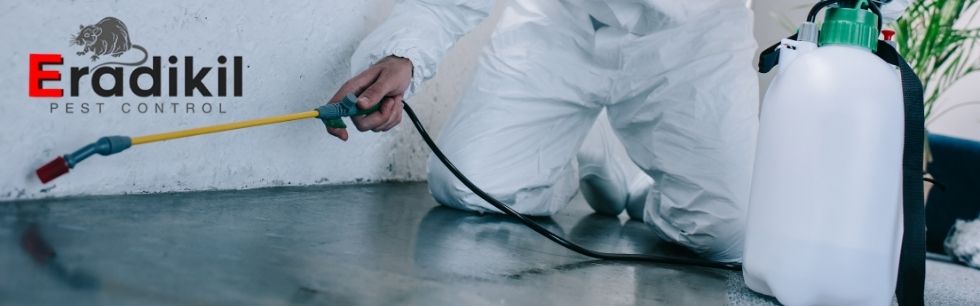
Using approved compounds, we treat the nest and its entry/exit points. This ensures that the eradication process is complete. We do this while maintaining strict PPE protocols and keeping you and your family safe from contamination.
Monitoring and advice
Most nests will be neutralised within hours, with residual activity dying off rapidly as returning worker wasps make contact with the treatment compound. We will advise you when it is safe to re-enter and what your next steps should be.
Removal and proofing
Once the nest is inactive, we can remove it on request and give advice on seasonal checking and proofing against reinfestation.
Protect your home – book your UK wasp nest removal today
A wasp nest in your loft can be stressful and risky. Spotting the early signs, taking the correct action, and choosing a professional solution keeps your family safe and prevents the infestation entering your living spaces. Available across Oxfordshire and the South of England, Eradikil offers fast, safe and guaranteed wasp nest removal. Don’t wait for things to escalate: Book your same-day wasp nest removal today and reclaim your attic!





0 Comments